
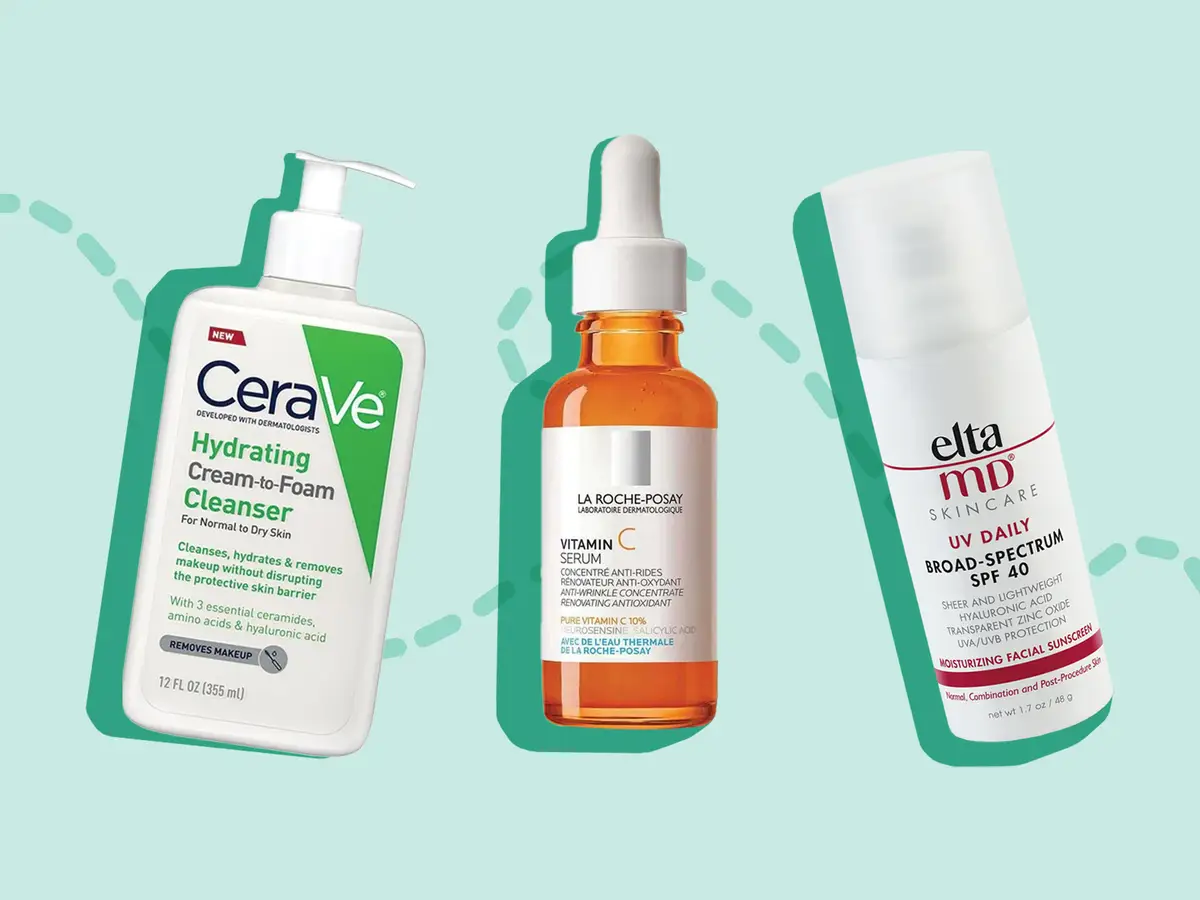
Hint: sunscreen, sunscreen, sunscreen.
Retinoids are a highly regarded skincare ingredient, but a lot of misinformation surrounds them.
For example, you might have heard that retinoids shouldn’t be used in the summer to avoid irritation.
That’s a myth.
Retinol can and should be used during summer, or any time of year.
The key is using it correctly to avoid adverse side effects.
To learn more, we asked two dermatologists for their expert advice on using retinol in the sun.
What Are Retinoids?
Retinoids are derivatives of vitamin A, converted to retinoic acid for use in skincare.
Often, retinoids and retinol are used interchangeably.
This is because “retinoid” is the broad term for both prescription and over-the-counter retinol.
Retinoids vs Retinol
Retinoids improve skin texture by promoting cell turnover and minimizing wrinkles by stimulating collagen under the skin.
While retinoids are available over the counter, the most potent are prescription-only (like tretinoin).
On the other hand, retinol refers to retinoids in over-the-counter products.
While still effective, retinol is less potent than prescription options due to a lower concentration of retinoic acid.
How to Use
Good news: retinoids can be used daily in summer.
“The frequency of applying retinol or retinoid in the summer doesn’t necessarily need to be altered unless there’s significant sensitivity,” says Dr. Erum Ilyas, board-certified dermatologist at Schweiger Dermatology Group.
Start slowly when using retinoids.
“With prescription strength, I recommend using a pea-size amount once a week, then increasing,” shares Dr. Farhang.
“With retinol, start every few nights, wait 30 minutes after washing your face before applying, mix it with your moisturizer, and apply moisturizer afterward.”
Some more tips, below:
Take Your Skin Type and Concern Into Consideration
Dr. Sheila Farhang, board-certified dermatologist and founder of Avant Dermatology, says it’s important to consider your skin type and concerns (like melasma) and other skincare ingredients when using retinol in the summer.
“Skin types needing caution with retinol application in summer are those with melasma and who may be using other exfoliating ingredients like AHAs, hydroquinone, and kojic acid, because red, irritated skin, if not sun-protected, can worsen existing melasma,” she says.
The same goes for darker skin tones, which may be more prone to hyperpigmentation.
If you experience dryness, peeling, or exfoliation, Dr. Ilyas recommends reducing use to prevent photosensitivity.
Wear With Sunscreen
Retinol makes skin sun-sensitive, so always wear SPF.
You can even apply sunscreen with retinol.
“I suggest using at least SPF 30 on the face and reapplying every few hours,” says Dr. Farhang.
“If you’re sweating or doing activities, use a water-resistant sunscreen.”
Dr. Ilyas stresses applying sunscreen even if you aren’t going outside.
“A daily skincare routine should include sunscreen every morning, even when not planning to be outdoors, to avoid the risk of unplanned sun exposure,” the dermatologist says.
If you do go outside, she recommends wearing a hat for extra protection.
Incorporate Into Your P.M. Routine
To promote effectiveness, Dr. Farhang says to use your retinoid product at night.
Higher vitamin A concentrations, found in prescription formulas, are most likely to cause irritation.
If your skin doesn’t tolerate it after a few months, try another product.
How to Treat Retinoid Irritation
If you experience irritation like redness or peeling, stop using retinoids immediately.
“Take a break from retinoids for about a week.
If excess redness or peeling is noted, use a low potency steroid topically, such as hydrocortisone 0.5% cream, for a few days to help reduce the inflammatory response,” Dr. Ilyas says.
“Use aloe vera gel at night to give the skin a chance to restore and repair itself overnight.”
